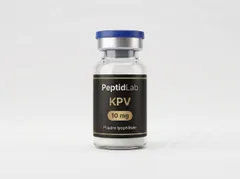
KPV is a tripeptide: just three amino acids, lysine, proline and valine. They are the last three amino acids of α-MSH, the melanocyte-stimulating hormone, known for its role in skin pigmentation but also for its effects on inflammation.
Where KPV comes from
α-MSH is made from a large precursor, pro-opiomelanocortin, which also gives rise to ACTH. In the 1980s and 1990s, teams looked for the part of α-MSH responsible for its anti-inflammatory effect. The final fragment, KPV (positions 11 to 13), kept a good part of it, without the effects on pigmentation.
How it works, according to studies
- In the gut, KPV is carried into cells by PepT1, a small-peptide transporter whose levels rise when the colon is inflamed.
- Once inside the cell, it reduces the activation of NF-κB and MAP kinases, two central switches of the inflammatory response.
- Unlike α-MSH analogues such as melanotan, it is not described as a pigmenting agent.
What the studies show
In mice, KPV given orally or added to drinking water reduces inflammation in colitis models. KPV-loaded nanoparticles, designed to release the peptide in the colon, gave comparable results. Studies also cover the skin and cultured immune cells.
To date, no published clinical trial has evaluated KPV in humans. The data come from cultured cells and animal models, often from a small number of teams.
What it is not
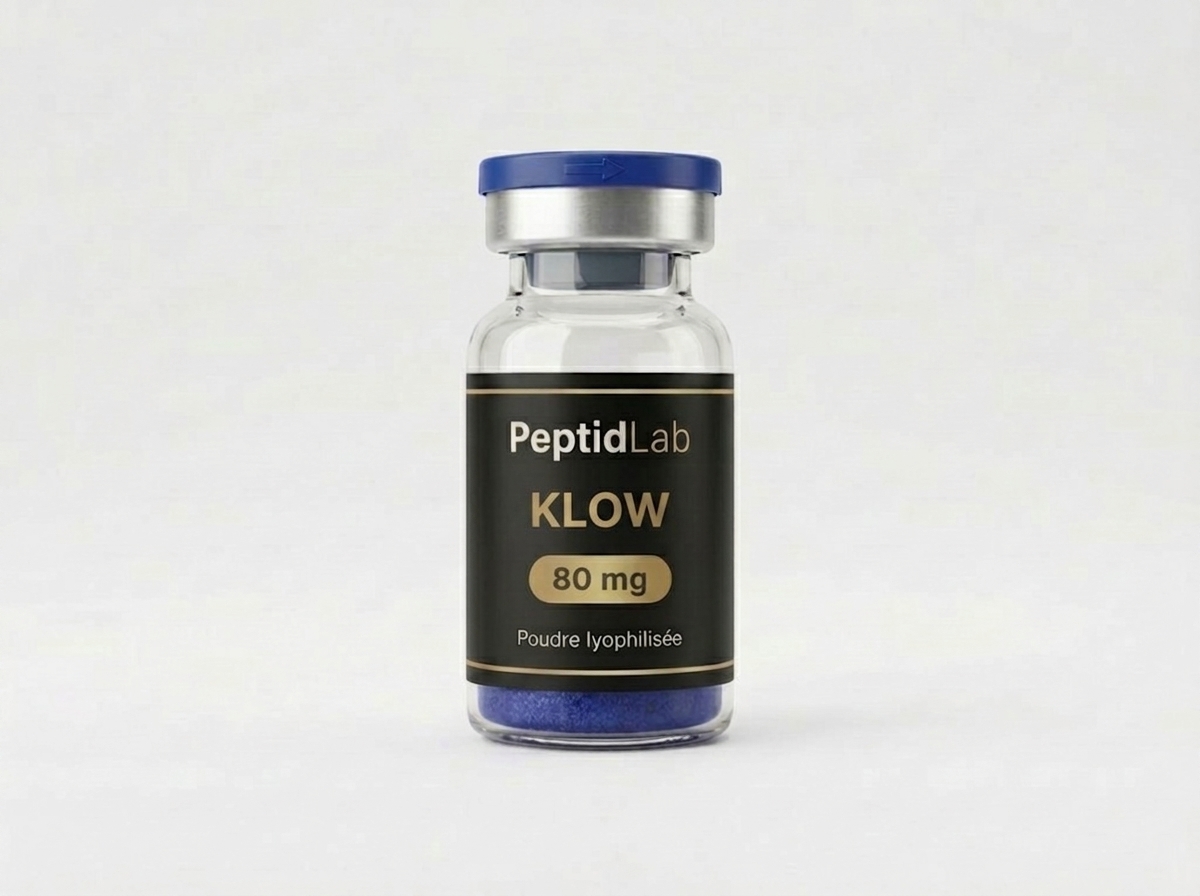
It is not a medicine, a tanning peptide or a treatment for inflammatory bowel disease. It is a laboratory reagent, sold for research. It is also part of the Klow blend, alongside GHK-Cu, BPC-157 and TB-500.
Fact sheet
- Last name
- KPV
- Sequence
- Lys-Pro-Val (3 amino acids)
- Origin
- C-terminal fragment (positions 11 to 13) of α-MSH
- Molar mass
- 342,4 g/mol
- Carrier
- PepT1, in the gut
- Regulatory status
- No marketing authorisation
What the research says
Summary of published data, written by the PeptidLab team. It describes molecules studied in the laboratory or in clinical trials: nothing here is an indication for use.
2004ReviewPharmacol Rev
Overview of the anti-inflammatory effects of α-MSH and its fragments, including the C-terminal tripeptide KPV.
2008PreclinicalGastroenterology
KPV enters intestinal cells via the PepT1 transporter and reduces inflammation in two mouse models of colitis.
2010PreclinicalGastroenterology
KPV-loaded nanoparticles, designed to release the peptide in the colon, reduce colitis in mice.
Safety: what studies report
- No safety data from human trials have been published.
Sources
Links to PubMed or to the original document. Articles in English.
- Catania A et al. Targeting melanocortin receptors as a novel strategy to control inflammation. Pharmacol Rev, 2004. PubMed
- Dalmasso G et al. PepT1-mediated tripeptide KPV uptake reduces intestinal inflammation. Gastroenterology, 2008. PubMed
- Laroui H et al. Drug-loaded nanoparticles targeted to the colon with polysaccharide hydrogel reduce colitis in a mouse model. Gastroenterology, 2010. PubMed
Updated October 2026.
Frequently asked questions
Does KPV cause tanning like melanotan?
No. KPV keeps only the last three amino acids of α-MSH: studies do not attribute any effect on pigmentation to it.
Are there any clinical trials on KPV?
No human trial has been published to date. The data come from cell cultures and animal models.
Why is KPV in the Klow blend?
Because it is studied for inflammation, alongside peptides studied for tissue repair (BPC-157, TB-500) and for the skin (GHK-Cu).
This guide has an informative and scientific purpose. PeptidLab products are intended exclusively for laboratory research and are not intended for human or animal consumption.