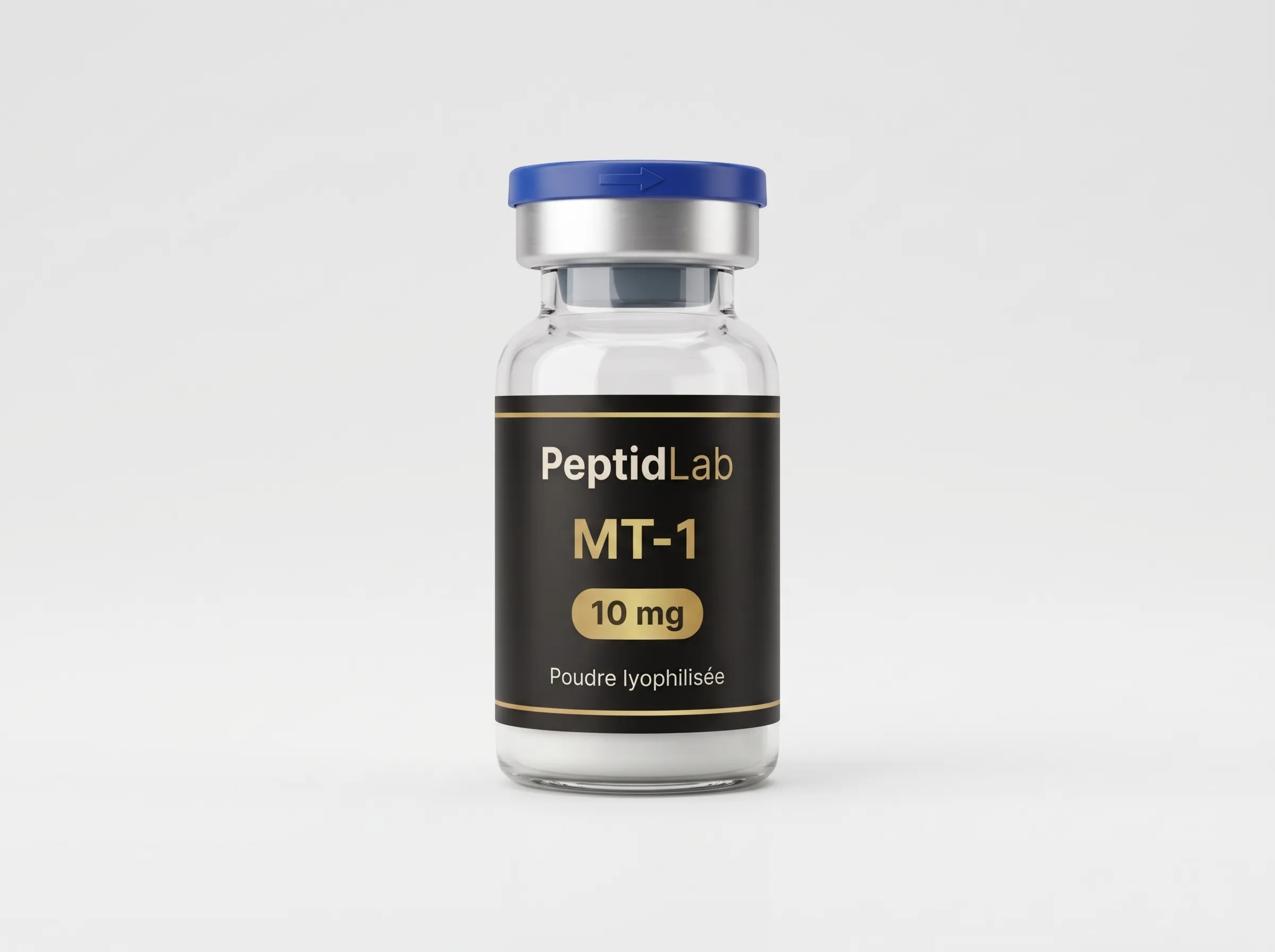
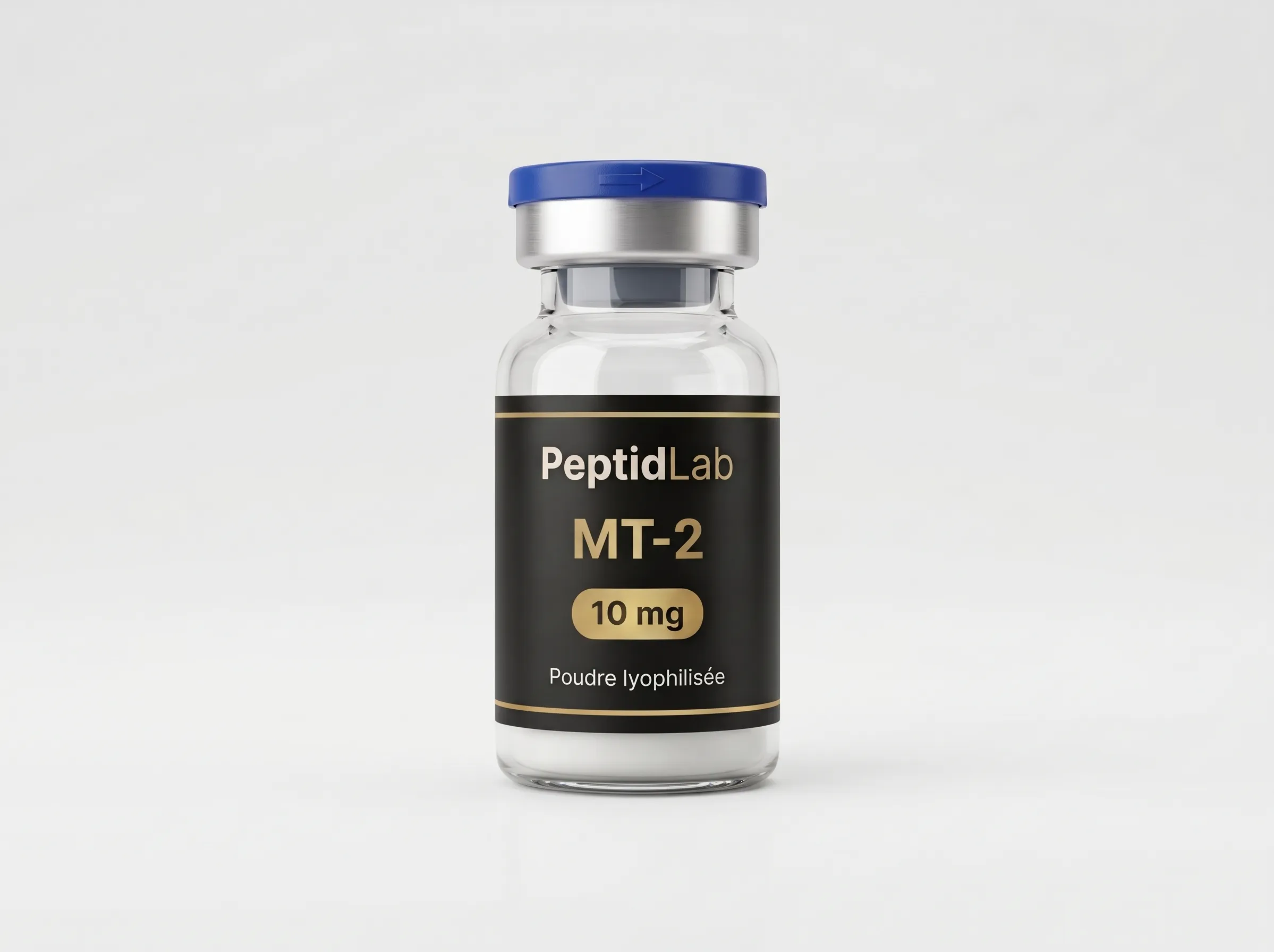
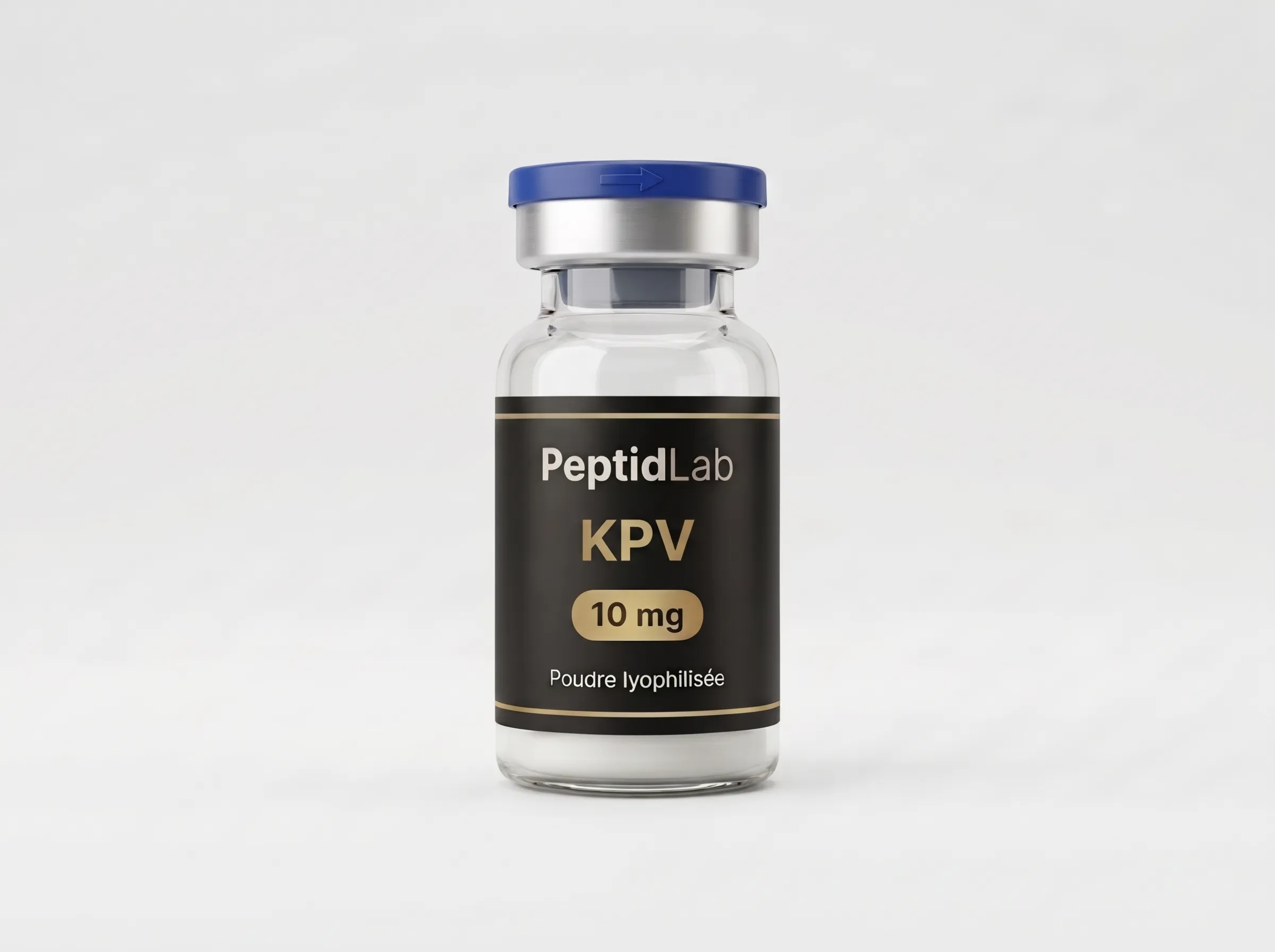
The α-MSH (melanotropic hormone) is a natural peptide derived from POMC. It signals mainly via melanocortin receptors. The MT-1 (afamelanotide) and MT-2 (Melanotan II) are synthetic analogues, more stable than the native hormone. They are not a cosmetic or a tanning protocol: they are research peptides.
How it works
Melanocortins talk to five receptors (MC1R to MC5R). The MC1R, on melanocytes, directs the production of eumelanin. The MC3R and MC4R, rather central, are studied in appetite and energy metabolism. A more or less selective analogue does not activate the same mixture of receptors — hence two molecules, two profiles.
MT-1 (afamelanotide)
Analogue linear of α-MSH, with norleucine at position 4 and D-phenylalanine at position 7 (hence the name NDP-MSH). It mainly targets the MC1R. Afamelanotide is in clinical development in certain photodermatoses: this drug is not not the research vial MT-1 10 mg.
MT-2 (Melanotan II)
Cyclic heptapeptide, shorter, more stable. It interacts with several receptors (MC1R, MC3R, MC4R). Historical publications mix pigmentation and other functions of melanocortins. The MT-2 10 mg does not have a marketing authorization; it is not intended for human use.
Comparison table
| MT-1 | MT-2 | |
|---|---|---|
| Structure | Linear (NDP-MSH) | Cyclic (heptapeptide) |
| Receptors | Mainly MC1R | MC1R, MC3R, MC4R |
| Common name | Afamelanotide | Melanotan II |
The KPV, distant cousin
The KPV is only the C-terminal end of α-MSH (Lys-Pro-Val). It is mainly studied in inflammation, not as an analogue of pigmentation. Same hormonal family, different research question.
Sales framework
No dosage, no sun exposure advice, no “tanning” results. Storage like other lyophilisates: practical guide. Laboratory research only.
Fact sheet
- Afamelanotide (MT-1)
- Linear 13-amino-acid α-MSH analogue
- CAS number of afamelanotide
- 75921-69-6
- Melanotan II (MT-2)
- Cyclic heptapeptide derived from α-MSH
- CAS number of melanotan II
- 121062-08-6
- Receptor or target
- Melanocortin receptors (MC1R for pigmentation)
- Regulatory status
- Afamelanotide authorised as an implant (Scenesse) in the EU in 2014; melanotan II not authorised
What the research says
Summary of published data, written by the PeptidLab team. It describes molecules studied in the laboratory or in clinical trials: nothing here is an indication for use.
1996Phase 1Life Sci
First pilot trial of melanotan II in healthy men: skin tanning, accompanied by nausea and flushing.
2006ReviewPeptides
History of the development of melanocortin peptides, from α-MSH to the analogues afamelanotide and bremelanotide.
2015Phase 3N Engl J Med
In patients with erythropoietic protoporphyria, the afamelanotide implant lengthens pain-free time in the sun.
Safety: what studies report
- Melanotan II: nausea, flushing and spontaneous erections are described; cases of new or changing moles have been published. Several health authorities warn against unauthorised self-tanning injections.
Sources
Links to PubMed or to the original document. Articles in English.
- Dorr RT et al. Evaluation of melanotan-II, a superpotent cyclic melanotropic peptide in a pilot phase-I clinical study. Life Sci, 1996. PubMed
- Hadley ME, Dorr RT. Melanocortin peptide therapeutics: historical milestones, clinical studies and commercialization. Peptides, 2006. PubMed
- Langendonk JG et al. Afamelanotide for Erythropoietic Protoporphyria. N Engl J Med, 2015. PubMed
Updated October 2026.
Frequently asked questions
MT-1 and MT-2, are they tan?
No. These are research peptides, analogous to α-MSH. Any use on humans is outside the scope of our sales.
What is the difference between the two?
MT-1 (afamelanotide) is linear and more selective for the MC1R receptor. MT-2 (Melanotan II) is cyclic and interacts with several melanocortin receptors.
Is KPV a melanotan?
No. KPV is a tripeptide (Lys-Pro-Val), a C-terminal fragment of α-MSH, mainly studied in inflammation.
This guide has an informative and scientific purpose. PeptidLab products are intended exclusively for laboratory research and are not intended for human or animal consumption.