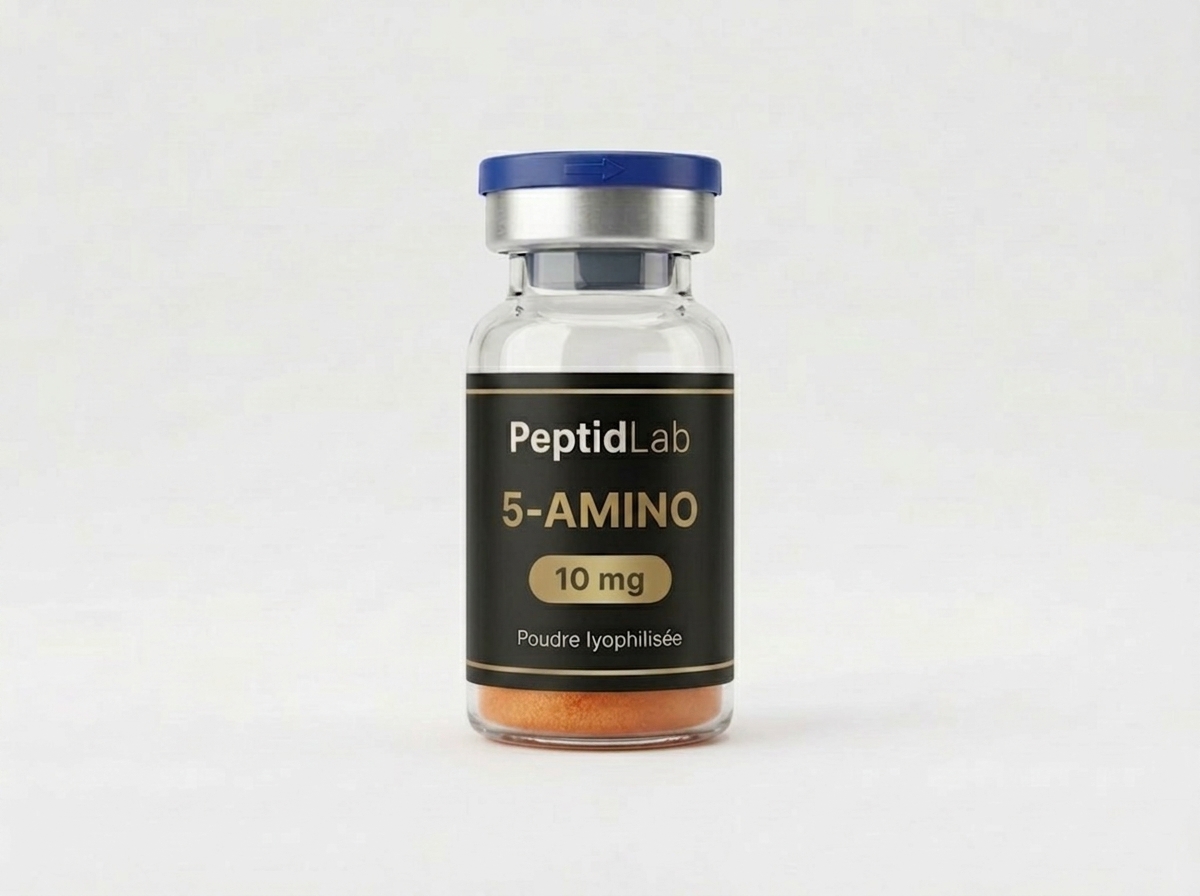
The 5-Amino-1MQ is not a chain of amino acids. It is a small molecule of synthetic origin, sold lyophilized alongside the peptides because research links it to the same field: cellular energy.
How it works
Its described target is nicotinamide N-methyltransferase (NNMT). This enzyme methylates nicotinamide and, in doing so, can reduce the pool available to make more NAD. Inhibiting NNMT is therefore one way, in published models, of leaving more nicotinamide in the NAD pathway.
It is not NAD+ in a vial, and it is not a GLP-1 analogue. The mechanism is upstream of the cofactor, not a hormone.
What the research studies
- Adipocytes and liver : NNMT activity is often measured there.
- Energy metabolism : link with NAD, not with the GH axis.
- Animal models and cultures : most of the data. None of this carries over to humans on its own.
Our vials: 5 mg, 10 mg and 50 mg. The working schedule is on the page Protocols.
Frequently asked questions
Why only "5-Amino" on the label?
It is the short name of 5-amino-1-methylquinolinium, often written 5-Amino-1MQ. The label shows the vial mass, not a dosage.
Is it a peptide?
No. It is a small molecule. It is grouped with research peptides because it is lyophilized and studied on metabolism, but its chemistry is not that of a peptide.
Fact sheet
- Last name
- 5-amino-1-methylquinolinium
- Nature
- Small molecule, not a peptide
- Molar mass
- About 159 g/mol (cation)
- Receptor or target
- Nicotinamide N-methyltransferase (NNMT)
- Regulatory status
- No marketing authorisation; no published human trial
What the research says
Summary of published data, written by the PeptidLab team. It describes molecules studied in the laboratory or in clinical trials: nothing here is an indication for use.
2014PreclinicalNature
In mice, reducing NNMT activity in adipose tissue protects against diet-induced obesity.
2018PreclinicalBiochem Pharmacol
Selective NNMT inhibitors, including 5-amino-1MQ, reduce fat mass in obese mice without changing their food intake.
2019PreclinicalBiochem Pharmacol
In aged mice, NNMT inhibition activates muscle stem cells and improves muscle regeneration.
Safety: what studies report
- No human safety data have been published.
Sources
Links to PubMed or to the original document. Articles in English.
- Kraus D et al. Nicotinamide N-methyltransferase knockdown protects against diet-induced obesity. Nature, 2014. PubMed
- Neelakantan H et al. Selective and membrane-permeable small molecule inhibitors of nicotinamide N-methyltransferase reverse high fat diet-induced obesity in mice. Biochem Pharmacol, 2018. PubMed
- Neelakantan H et al. Small molecule nicotinamide N-methyltransferase inhibitor activates senescent muscle stem cells and improves regenerative capacity of aged skeletal muscle. Biochem Pharmacol, 2019. PubMed
Updated October 2026.
This guide has an informative and scientific purpose. PeptidLab products are intended exclusively for laboratory research and are not intended for human or animal consumption.