The lyophilization removes water from a peptide under vacuum and at low temperature. In this powder form, it is much more stable than in solution. But it remains sensitive to five factors: heat, humidity, light, oxygen and freezing and thawing cycles.
Before reconstitution: the powder
- Daily : in the refrigerator, between 2 and 8°C, in its box.
- Over a long period : in the freezer, around −20°C.
- During transport : a few days at room temperature are generally without consequences.
In all cases, keep the vial closed, away from light.
The number one enemy: humidity
A vial taken out of the refrigerator is cold: if you open it immediately, the humidity in the air condenses on the powder. Let it come to room temperature, closed, before opening it. For extended storage, a desiccant bag in the box limits humidity.
After reconstitution: the solution
- Store the solution in the refrigerator, between 2 and 8°C, away from light.
- Do not freeze it: freezing and thawing cycles degrade the peptide.
- Note the reconstitution date on the vial.
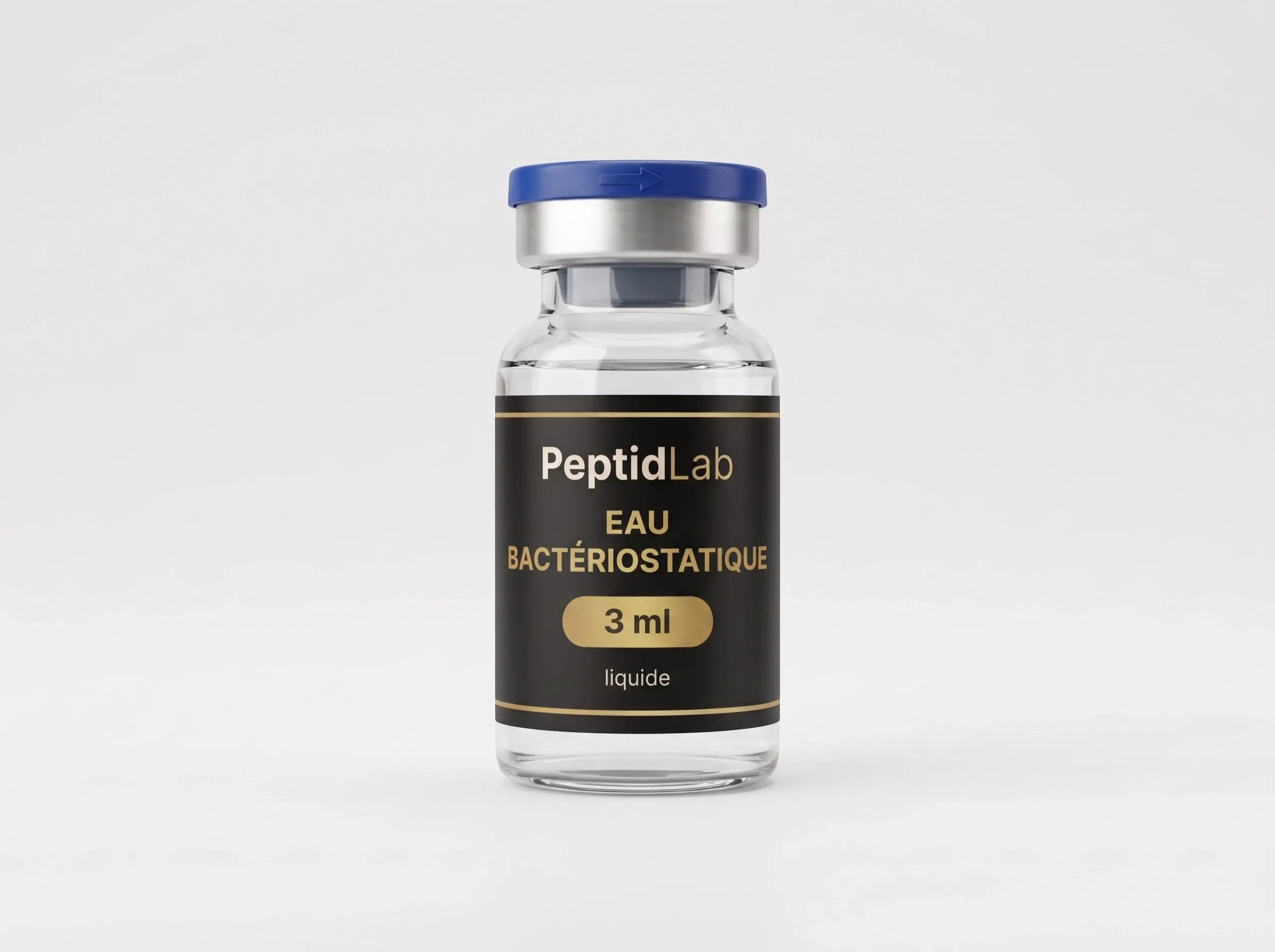
- The bacteriostatic water, thanks to its 0.9% benzyl alcohol, limits bacterial proliferation once the bottle is opened.
| Situation | Where to store |
|---|---|
| Powder, everyday use | Refrigerator (2 to 8°C) |
| Powder, long lasting | Freezer (−20°C) |
| Reconstituted solution | Refrigerator, never freezer |
| Pre-filled pen | Refrigerator, do not freeze |
The most sensitive peptides
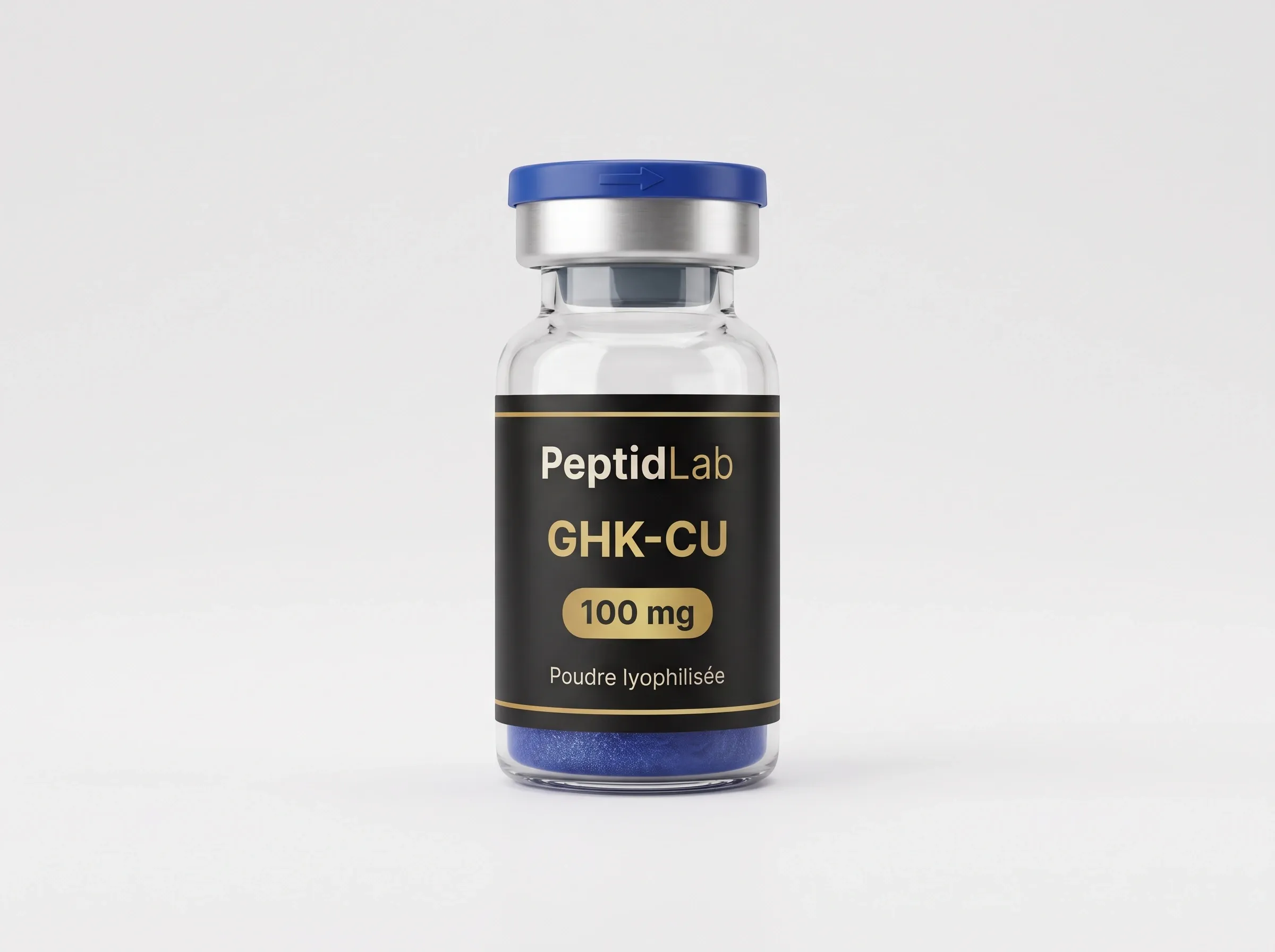
Certain amino acids, such as methionine, tryptophan or cysteine, oxidize more easily. This is the case, for example, of Semax or MOTS-c, which contain methionine. The GHK-Cu, he is particularly sensitive to light.
Signs of degradation
- A powder that changes color (excluding GHK-Cu, naturally blue).
- A clumped or wet-looking powder.
- A solution that is cloudy or contains particles after reconstitution.
If in doubt upon receipt of a PeptidLab product, contact us within 7 days with a photo: we will replace any non-compliant product.
Fact sheet
- Lyophilized powder
- Cold (2 to 8 °C), away from light; in the freezer for long-term storage
- Reconstituted solution
- Between 2 and 8 °C, never in the freezer
- The peptide's enemies
- Humidity, heat, light, freeze-thaw cycles
- Good habit
- Write the reconstitution date on the vial
What the research says
Summary of published data, written by the PeptidLab team. It describes molecules studied in the laboratory or in clinical trials: nothing here is an indication for use.
2000ReviewInt J Pharm
Freeze-drying removes the water that allows degradation reactions: this is what makes proteins and peptides stable as a powder.
2010ReviewPharm Res
Review of the degradation pathways of therapeutic proteins: oxidation, deamidation, aggregation, all sensitive to temperature and pH.
Frequently asked questions
Does a lyophilized peptide support transport without cold?
Yes, in the vast majority of cases: in powder form, the peptides tolerate a few days at room temperature. Place them in the refrigerator upon receipt.
Can you freeze a pre-filled pen?
No. A peptide in solution should not be frozen: the pen should be stored in the refrigerator, between 2 and 8°C.
Why let the vial come to room temperature before opening it?
To prevent moisture in the air from condensing on the cold powder. Water accelerates the breakdown of peptides.
This guide has an informative and scientific purpose. PeptidLab products are intended exclusively for laboratory research and are not intended for human or animal consumption.