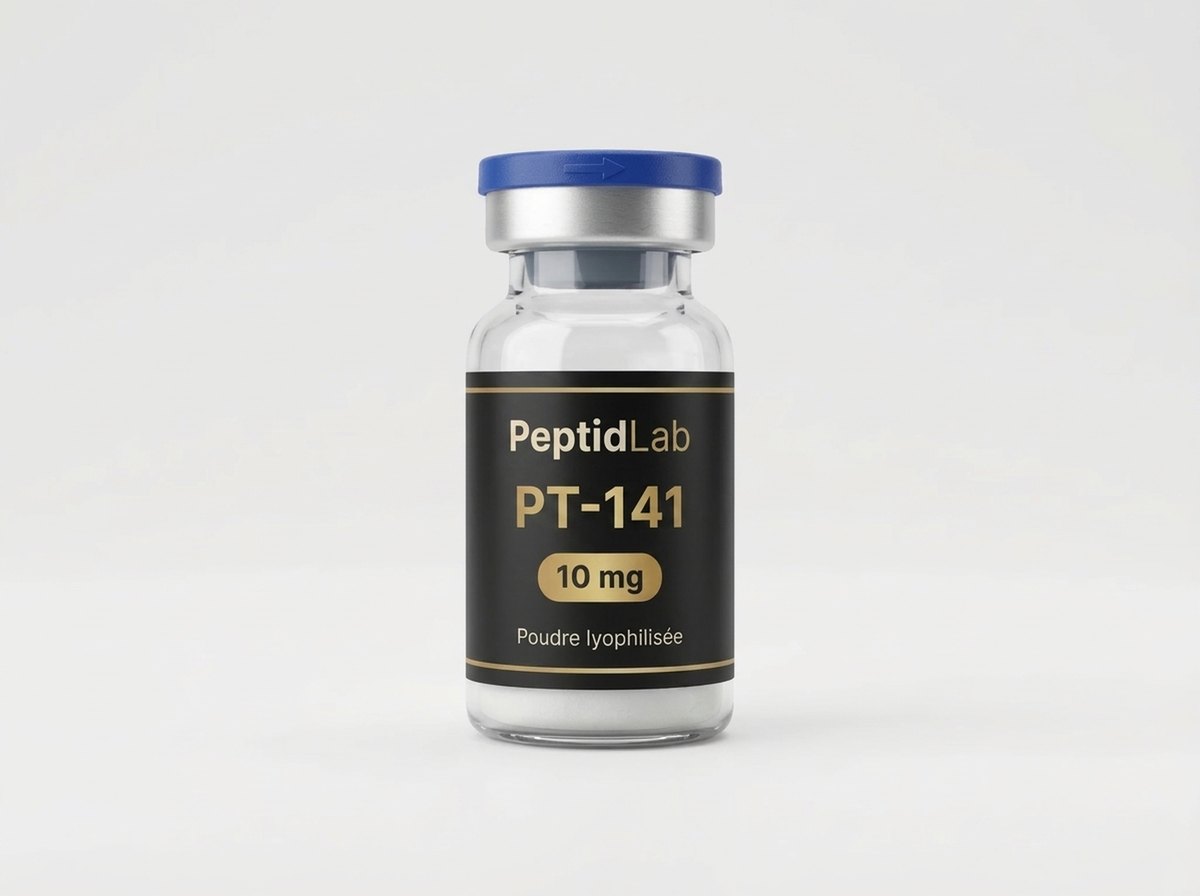
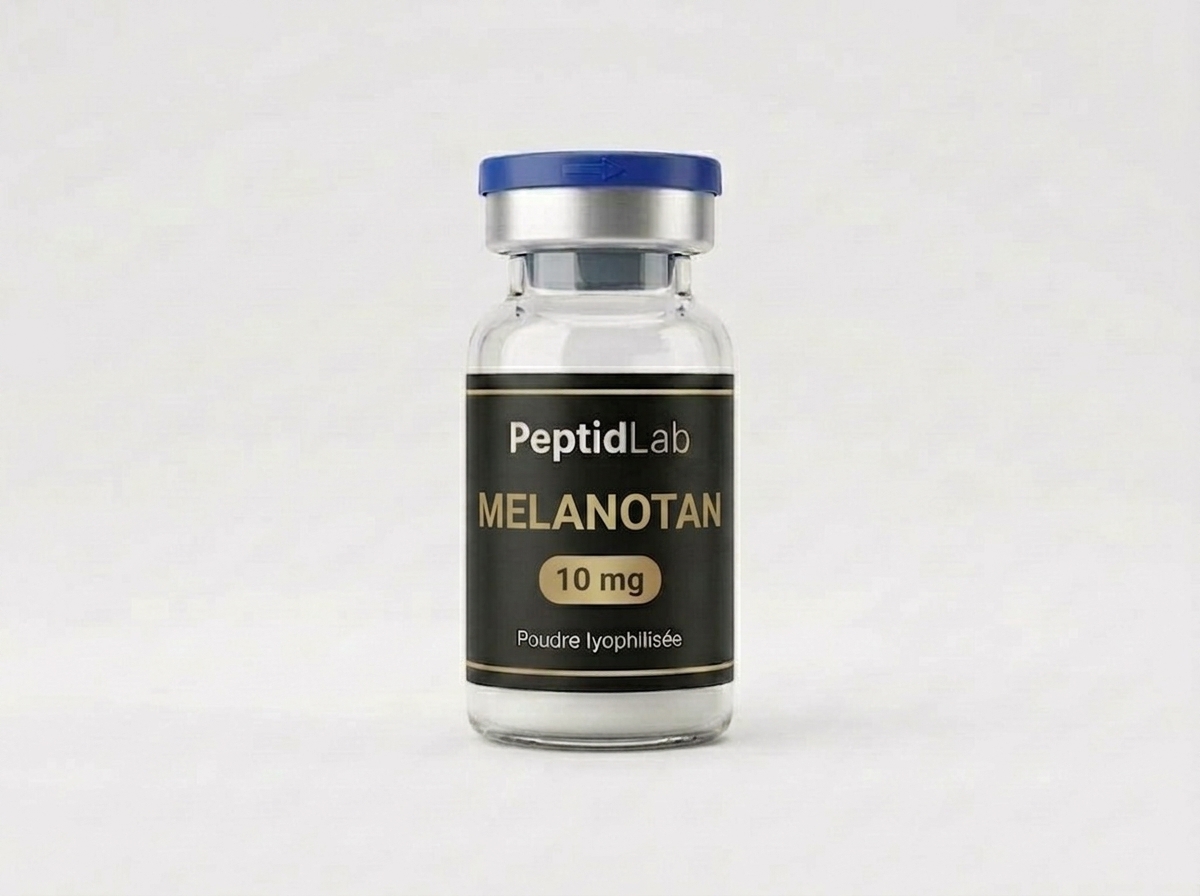
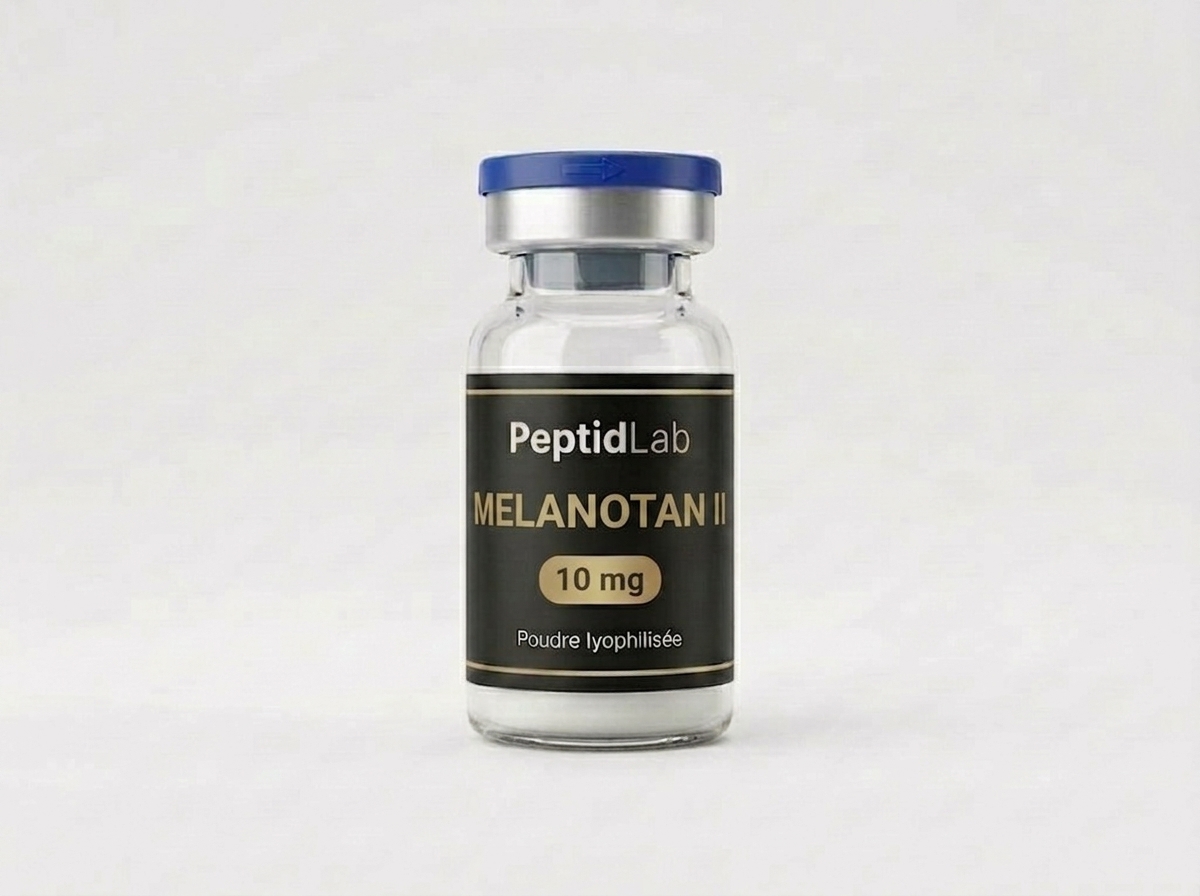
The PT-141 is the research name of bremelanotide. Like MT-1 (afamelanotide) and MT-2 (melanotan II), it is an analogue of α-MSH, the hormone that activates melanocortin receptors. The resemblance stops at the common core.
What separates them
- MT-1 : linear analogue, mainly discussed via the receptor MC1R (pigmentation). Afamelanotide also has a European marketing authorisation as an implant, for a very specific indication. This vial is not that implant.
- MT-2 : cyclic analogue, cited both for MC1R and for other melanocortin receptors. No marketing authorisation.
- PT-141 : the literature discusses it mainly via MC3R and MC4R, not as a pigmentation agent.
The MT-1 / MT-2 details are in the guide Melanotan. PT-141 has its own 10 mg vial and its own reconstitution schedule.
Frequently asked questions
Can MT-2 be replaced with PT-141?
No. The receptor profiles described do not overlap. A protocol written for one cannot be copied onto the other.
Is the catalogue's PT-141 the medicine bremelanotide?
No. The authorised medicine has its own dossier, form and indications. The PeptidLab vial is a research lyophilizate.
Fact sheet
- Last name
- Bremelanotide (PT-141)
- Structure
- Cyclic heptapeptide derived from melanotan II
- Molar mass
- 1 025,2 g/mol
- N° CAS
- 189691-06-3
- Published half-life
- About 2.7 hours
- Receptor or target
- Melanocortin receptors, mainly MC4R
- Regulatory status
- Authorised in the United States in 2019 (Vyleesi); not authorised in the European Union
What the research says
Summary of published data, written by the PeptidLab team. It describes molecules studied in the laboratory or in clinical trials: nothing here is an indication for use.
2016Phase 2bWomens Health
Dose-finding trial in premenopausal women: improved sexual desire scores at intermediate doses compared with placebo.
2019Phase 3Obstet Gynecol
Two RECONNECT trials in 1,267 premenopausal women: a modest but significant improvement in desire and less distress linked to its absence.
Safety: what studies report
- In phase 3 trials, the most common adverse effects are nausea (about 40% of participants), flushing and headache; a transient rise in blood pressure and localised hyperpigmentation are also described.
Sources
Links to PubMed or to the original document. Articles in English.
- Clayton AH et al. Bremelanotide for female sexual dysfunctions in premenopausal women: a randomized, placebo-controlled dose-finding trial. Womens Health, 2016. PubMed
- Kingsberg SA et al. Bremelanotide for the Treatment of Hypoactive Sexual Desire Disorder: Two Randomized Phase 3 Trials. Obstet Gynecol, 2019. PubMed
Updated October 2026.
This guide has an informative and scientific purpose. PeptidLab products are intended exclusively for laboratory research and are not intended for human or animal consumption.